A little before seven most mornings, a stretch of crusher-fine gravel just north of Three Pond Park fills up the way a coffee counter fills up somewhere with an actual coffee counter. Runners cut through Blackmer Common. A rider on a stable horse from one of the Village's private barns passes a dog walker headed the other way. Nobody honks, because there's nothing to honk at. There's also nowhere to grab a coffee once you're done, because Cherry Hills Village has no commercial district at all. No Main Street, no corner store, no strip of shops. That was the point when the city incorporated in 1945, and it's still the point today.
Which is exactly why what happens on the canal matters more here than it would almost anywhere else in the Denver metro. In a city built without a town square, the High Line Canal Trail has become one. And 2026 is turning into the year the Village reinvests in that fact, through trail work, a rule change years in the making, and a new coffee stop that's about as close to a Main Street storefront as this neighborhood is ever going to get.
A Trail Built for a Village Without a Center
Cherry Hills Village covers about 6.5 square miles in Arapahoe County, bordered by Hampden Avenue to the north and Belleview to the south, with the South Platte River corridor forming its western edge. It's home to just over 6,400 residents with a median age just under 48, and it holds more than 30 miles of trails and 47 acres of parkland inside those boundaries, according to a recent neighborhood profile from Lavender Coffee Boutique, which opened its second location on the Village's edge this year. For a community this size, that's an outsized amount of shared outdoor space, and it's doing double duty as the neighborhood's only real gathering ground.
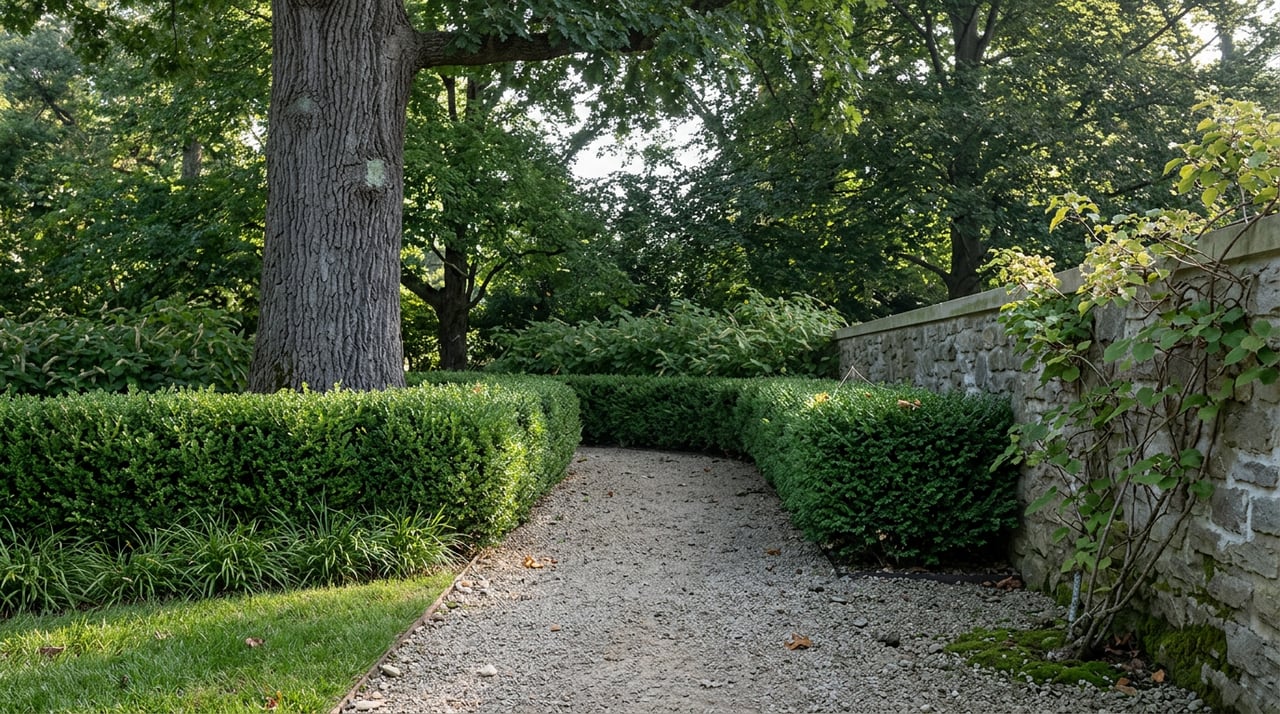
The High Line Canal Trail runs directly through it as Segment 13, a 2.9-mile stretch that starts near East Belleview Avenue in Greenwood Village and ends at Three Pond Park in Cherry Hills Village, winding past the open grassland of Blackmer Common on a crusher-fine gravel surface. No permits, no reservations, just a shared path used by walkers, cyclists, and equestrians moving at very different speeds through the same quiet corridor.
That quiet is deceptive. According to figures cited in the city's own application for Arapahoe County trail funding, the most recent counter tally recorded 177,281 users at mile 34 of the canal and 97,528 at mile 36, the two markers that fall inside Cherry Hills Village. Set against a resident population of roughly 6,400, that single point on the trail sees traffic equivalent to nearly 28 Village-sized populations passing through it. Most of that volume isn't local. The canal is a 71-mile trail connecting Cherry Hills Village to Greenwood Village, Littleton, and Aurora, and this particular stretch happens to be one of its most heavily used sections. The Village absorbs that traffic, and its own Public Works department is the one that maintains it.
What's Actually Getting Fixed This Year
That maintenance has been overdue. The trail surface through the Village was installed in 2016, and a decade of heavy use has worn it thin in places. In materials the city submitted requesting Arapahoe County funding for the work, officials note that sections of the crusher-fine surface have worn away entirely in low spots, leaving bare dirt that turns muddy and rutted with nothing left to bind it together. Parks staff have had to bring out a skid steer periodically just to smooth the worst of it.
The resurfacing plan the city has put forward covers the entire Village portion of the canal, spanning miles 33 through 36.5, a full 3.8 miles at roughly 12 to 14 feet wide. The work would apply a fresh 2-inch layer of crusher fine to eliminate the ruts and low spots, and it touches four parks and open spaces directly:
- Three Pond Park, the trail's northern anchor at 4100 S. Colorado Boulevard
- Dahlia Hollow Park
- Quincy Farm
- Blackmer Common, the open grassland along Segment 13
The county funding pilot behind the project requires any awarded work to wrap by December 31, 2026, and the city's plan estimates the resurfacing itself would take about four weeks once it starts, handled in-house by the Public Works crew rather than an outside contractor. Separately, the High Line Canal Conservancy confirms that Cherry Hills Village is extending an irrigation line north of Belleview Avenue in 2026 and planting additional trees along that stretch in partnership with the Conservancy, part of a longer-running effort to establish shade canopy along a trail that runs almost entirely exposed.
The Rule That Finally Got Written Down
If the resurfacing project is about the trail's surface, the bigger shift this year is about who's allowed to use it. E-bikes have been a point of contention on the canal for years. City records show public comment on the issue going back to at least 2021, with residents split between wanting an assist for aging joints and worrying about high-speed traffic on a path shared with horses, strollers, and slow walkers.
That debate has an answer now. Updated June 25, 2026, the city's official e-bike and e-moto guidance draws a clear line, and it's stricter than a lot of residents may realize:
| Vehicle class | CHV trails & parks | Public roads | Notes |
|---|---|---|---|
| E-bike (pedal-assist) | Not permitted, except for individuals with disabilities using it for mobility assistance | Permitted | Rule reaffirmed June 25, 2026 |
| E-moto or electric dirt bike (over 750W) | Not permitted, including sidewalks | Permitted with license, registration, and insurance | Above 4,476W or 50cc, a motorcycle endorsement is required |
The distinction matters because a lot of the electric two-wheeled traffic showing up on Colorado trails isn't a traditional e-bike at all. Anything over 750 watts no longer qualifies as a legal e-bike under state law, and anything over 4,476 watts, or 50cc, is treated as a motorcycle requiring a motorcycle endorsement to operate legally on a road, let alone a trail. The city's guidance is explicit that this summary doesn't replace the full requirements in the Cherry Hills Village Municipal Code or state law, but the practical upshot for anyone walking the canal is simple: if you see an e-bike or an e-moto on the trail this year, it's not supposed to be there, mobility-assistance use aside.
Beyond the canal itself, the city has also newly signed and mapped a second path, the Village Trail, giving residents a walking option that doesn't share space with cyclists passing through toward Greenwood Village or Denver.
A Coffee Stop for a Neighborhood With No Storefronts
Given that Cherry Hills Village has no commercial development inside its own boundaries by design, the arrival of a coffee shop carrying a Cherry Hills Village address is a bigger deal here than it would be anywhere else. Lavender Coffee Boutique opened its second location at 1400 E. Hampden Avenue in February 2026, right on the Village's northern boundary line, open daily from 6:30 a.m. to 4 p.m. It sits exactly where a canal walker or a morning runner would end up if their loop took them north toward Hampden, which for a lot of residents it does.
The shop's own account of its first months describes watching the rhythms of the neighborhood from behind the counter at 6:30 in the morning: professionals headed to the Denver Tech Center, dog walkers turning a quick errand into a two-mile loop through tree-lined streets before most of the Village is awake. It's a small thing, a coffee counter at the edge of a city with none of its own, but it fills a gap that's existed here since 1945.
Where the Calendar Still Brings People Together
Without a commercial strip to anchor community life, Cherry Hills Village leans on its parks calendar more than most neighborhoods its size. The city's annual Summer Movie Night at John Meade Park is one of the few events that draws residents into one shared space on purpose, this year screening Inside Out with popcorn, snacks, and ice cream provided and residents bringing their own picnic blankets. Just across the Village line in Denver, reachable by continuing north along Segment 14 of the canal past Three Pond Park, a Food Trucks and Live Music event drew neighbors from both sides of the boundary to Mamie D. Eisenhower Park in late June.
None of these are large events by Denver standards. They don't need to be. In a neighborhood built to stay quiet, a movie under the stars or a food truck a mile up the trail counts as a gathering.
The Corridor Doing the Work of a Downtown
Put it together and the pattern is hard to miss. A resurfacing project bringing the canal's worst-worn stretch back to a usable standard. A rule finally settled after years of resident debate over who gets to move fast on a shared path. A tree-planting and irrigation effort trying to give a mostly exposed trail some shade. A coffee shop opening exactly where the morning loop ends. None of these are flashy capital projects. They're the kind of incremental investment a place makes in its only real public space when it doesn't have a Main Street to fall back on.
If you live here, none of this changes your address. It changes what your Tuesday morning looks like for the rest of the year.
If you're weighing what daily life actually looks like in a neighborhood like this one, or wondering how a corridor like the canal factors into a property's value, the Cherry Hills Village neighborhood guide has more on the area's character and housing stock. And if you'd like to talk through what's happening in this market with someone who tracks it closely, Molly Weiss is always glad to help. Let's Connect.