For more than a year, the storefront at 1313 East Sixth Avenue sat with its lights off. No sandwich board on the sidewalk, no reservation line lighting up at five o'clock, no smell of anything cooking drifting past the Gates. If you walked your dog past that corner on a Tuesday night in the fall of 2025, you'd have seen exactly what you saw the Tuesday before, and the one before that. Nothing.
That kind of stillness is easy to miss in most Denver neighborhoods, where a closed restaurant is one storefront among dozens. In Country Club, it was closer to a power outage. The building had been Fruition, the restaurant chef Alex Seidel opened in 2007 and ran for eighteen years before closing it in January 2025. For a neighborhood with almost no commercial space of its own, that single address had quietly been doing a lot of work.
The Neighborhood With Almost No Storefronts
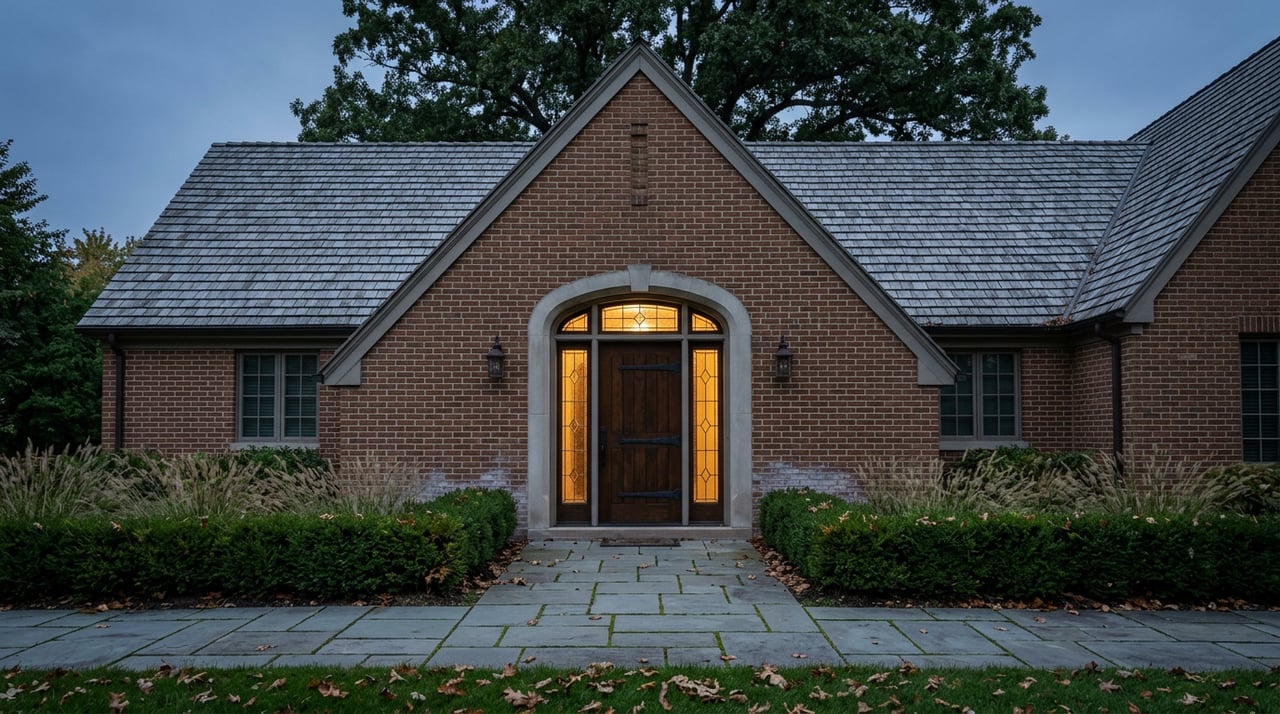
Country Club doesn't have a main street. It doesn't have a school within its own boundaries either. What it has is a residential grid of Tudor Revivals, Mediterranean-gated drives, and Denver Squares tucked behind hundred-year-old elms, with commercial life pushed entirely to the edges along Sixth Avenue and University Boulevard, where the neighborhood hands off to Cherry Creek. That's by design. The historic district, platted with Frederick Law Olmsted Jr.'s help in 1909, was built as a residential enclave first, and the zoning has stayed true to that idea for well over a century.
Which means the strip of businesses along Sixth Avenue isn't a bonus amenity the way it might be in a neighborhood with a dozen commercial blocks. It's closer to the only public room the neighborhood has. Fewer than 400 homes sit inside the historic district's boundaries, and the businesses that serve them almost all live on this one border. When one of them goes dark, residents feel it in a way that a bigger neighborhood wouldn't.
One Address, Eighteen Years, Every Occasion
Fruition wasn't just well regarded. It was the kind of restaurant a neighborhood built its calendar around, the place for a fortieth birthday and also the place you walked to on a Wednesday because you didn't feel like cooking. Seidel, a James Beard Award winner, opened it in a small kitchen on Sixth Avenue in 2007 and kept it there for eighteen years, changing the menu with the seasons and building the kind of following that makes a closing announcement feel personal to people who've never met the chef.
When Fruition served its last plate on January 12, 2025, it wasn't just one restaurant closing. For Country Club specifically, it was the neighborhood's only true dinner reservation disappearing.
The Corner That Sat Dark
What happened next is the part of the story that outlasted the closing itself. The space at 1313 East Sixth Avenue sat empty through the spring, summer, and fall of 2025. A new concept wasn't announced until December, and even then, opening day was still five months away.
That's a long stretch for a single storefront to sit dark on a strip this small. During it, the rest of the block kept the lights on in its own way. A short walk down Sixth Avenue and around the corner still got you:
- Coffee and pastries at Novo Coffee, the neighborhood's regular morning stop
- A browse through The Lark, the gift shop that's been outfitting hostess presents and holiday décor since 1971
- A quick lunch from Satchel's on 6th, known for parmesan-crusted chicken and burgers loaded with pimento cheese
- A stop at the neighborhood's longtime butcher for dinner ingredients, since dinner out wasn't an option
Those four stayed exactly where they'd always been. What was missing was the one address that had made the strip feel complete after dark. Coffee in the morning and a gift for a friend in the afternoon are one kind of daily life. A table you can walk to on a Friday night is another, and for sixteen months, Country Club didn't have it.
What Came Back, and What It Kept
Madeline opened its doors on May 7, 2026, in that same space, and the person behind it has spent his career moving between two different culinary worlds. Chef Quincy Cherrett trained at the Culinary Institute of America and built his resume across Denver kitchens that don't usually share a chef: Sushi Den and Izakaya Den on one side, Colt & Gray and Death & Co. on the other. He ran his own 22 Provisions food truck before landing a stall called Eloise inside Avanti Food & Beverage, and Madeline is his first true brick and mortar.
The name comes from his newborn niece, and the menu reads like someone who genuinely can't pick a lane between his Asian training and his continental one. Early dishes include oysters with radish and green apple mignonette, a beet carpaccio finished with Thai red curry peanut sauce and lemon goat cheese, and a crab cake served over red miso shrimp bisque. The architecture firm behind the redesign, Regular Architecture, made a point of keeping pieces of the old Fruition space intact rather than gutting it, which is its own kind of acknowledgment that the corner already meant something before Cherrett got there.
What a Full Block Actually Feels Like Again
If you live inside the Gates or anywhere along this stretch of Sixth Avenue, the practical change is simple. The walk-to dinner option exists again, for the first time in sixteen months. What's less simple, and worth remembering the next time a small business on this same strip closes, is how much weight a single address in Country Club can carry. This isn't a neighborhood with a backup restaurant. It has one, and for a year and a half, it had none.
Madeline arrived with real anticipation built in, the kind of opening food writers had been tracking for months before the doors opened, and early tables have reportedly been hard to come by on weekend nights. If a walkable dinner reservation matters to how you use this neighborhood, book ahead rather than assuming you can wander in the way you might have with Fruition toward the end of its run.
The bigger takeaway is about the block itself. Country Club's charm has always been described in architectural terms, the Gates, the elms, the Fisher and Fisher facades. But the last sixteen months were a reminder that the neighborhood's actual daily rhythm depends on a commercial footprint you could fit on one side of one avenue. When it works, you barely notice it. When one piece goes missing, you notice everything.
If you're curious about the homes tucked behind those Gates, our Country Club Historic neighborhood guide is a good place to start.
Whether you're settled in for the long haul on Sixth Avenue or just keeping an eye on the neighborhood from a distance, Molly Weiss knows this stretch of Denver block by block. Let's Connect.