Ask someone who just finished nine holes at Harvard Gulch how to get to dinner on South Downing Street without a car, and until earlier this year, the honest answer involved a detour, a chain-link fence, and a story about a bridge. The golf course sits on the Rosedale side of the gulch. The restaurants sit a few blocks east. The trail that is supposed to connect them runs straight through a stretch of Harvard Gulch Park that spent this past winter torn up for a bridge replacement, with cleanup work stretching into summer.
That gap matters more here than it would almost anywhere else in Denver, because University is not really one neighborhood. It is three, held together by a drainage channel and a paved path that follows it.
Three Pockets, One Gulch
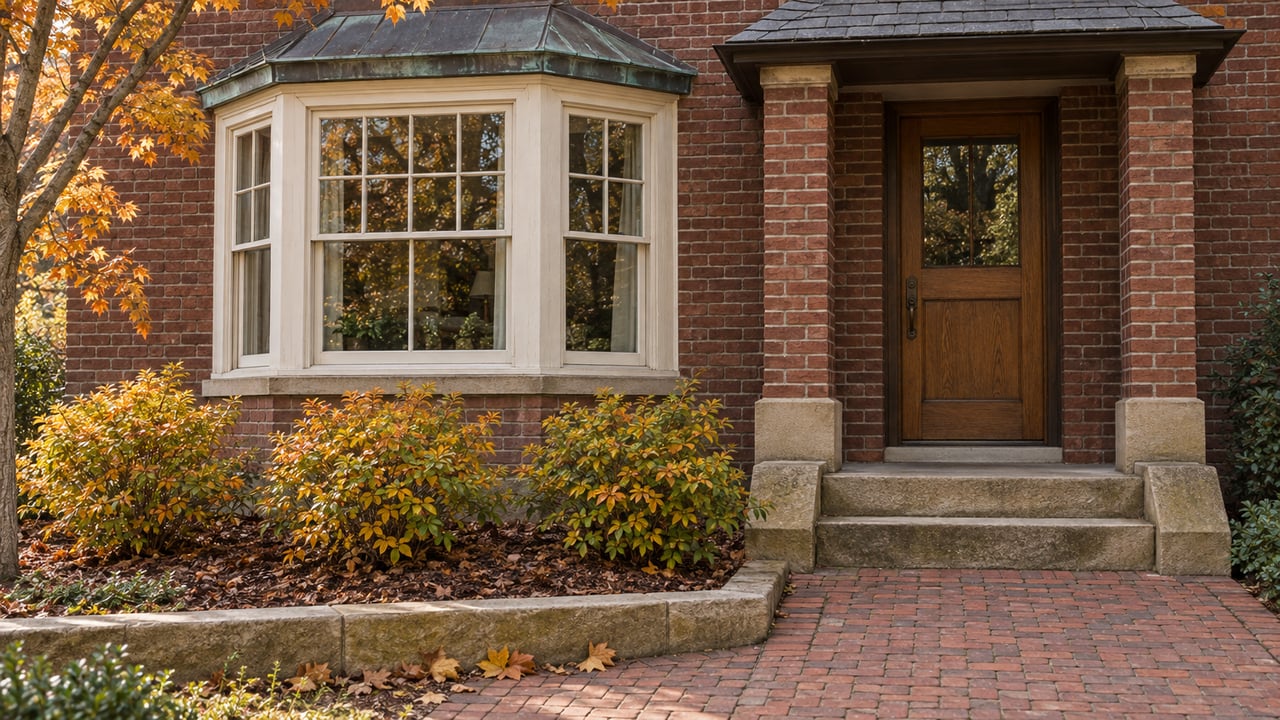
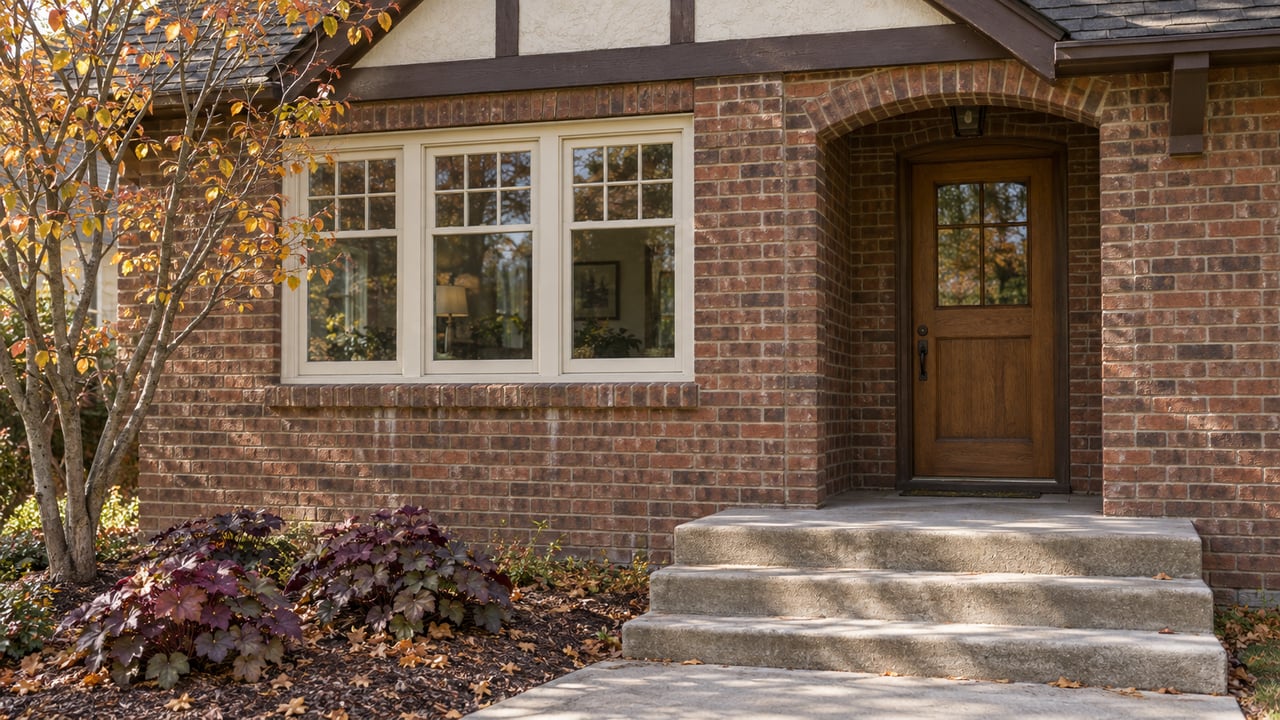
Rosedale sits west of South Downing Street, bounded by South Broadway on its far side, West Evans Avenue to the north, and West Iliff Avenue to the south. It is bungalows and Craftsman infill on tree-shaded blocks, home to fewer than 3,000 residents, and it revolves around Harvard Gulch Park. Cross Downing heading east and the character changes fast: this is where the University of Denver campus begins, just south of Iliff, and the streets start filling with the coffee shops and fast-casual spots that a college campus generates. Keep going east past the campus and you hit South Downing's commercial strip proper, a corridor of small storefronts that has nothing to do with the university and everything to do with the people who live around it.
None of these three pockets look at each other from their own front porches. What connects them, physically, is the Harvard Gulch Trail, a low-traffic path that threads east-west through the park and ties into the broader Denver trail network. It's the kind of route that works for dog walkers on a Tuesday morning and for someone finishing a round of golf on a Saturday afternoon, which is exactly why losing a piece of it for a few winter months, with the surrounding grounds torn up well past that, was a bigger disruption than a typical parks project.
The $1.7 Million Reason the Gulch Was Broken
The disruption had a name: the DeBoer Park Harvard Gulch Trail Bridge Replacement and Storm Water Improvements project, a joint effort between Denver Parks & Recreation and the Department of Transportation and Infrastructure, with the Mile High Flood District as a funding partner. The budget ran to $1.7 million, pulled from the DPR Legacy Fund, DPR capital funds, a RISE Denver bond, and DOTI storm funds.
| Phase | Timing |
|---|---|
| Design start | Fall 2024 |
| Construction begins | December 1, 2025 |
| Bridge and sewer construction complete | February 28, 2026 |
| Site restoration around the new bridge complete | Summer 2026 |
DPR's Brittany White and DOTI's Jason Wennen are listed as the project managers on the city's own project sheet. The bridge and sewer work wrapped in late February, and the surrounding grading and planting is finishing out this summer, which means the loop most residents took for granted before construction started is only now back to being a loop again. A separate, earlier phase of the same trail program resurfaced the stretch of path east of South Downing to South Lafayette Street with new asphalt and added safety upgrades where the trail crosses the drainage channel, so the fix runs wider than just the one bridge.
What the Loop Looks Like Again
With the bridge back, the full 1.3-mile paved perimeter path around Harvard Gulch Park is walkable end to end again, a route that takes most people somewhere around a half hour at an easy pace and gains only about 55 feet of elevation along the way. It circles a park that also holds the recreation center, a community garden, athletic courts, and open fields, so the trail doubles as a spine connecting all of that to the neighborhoods on either side. From the park, the route ties into bike lanes on both South Broadway and South Downing Street, which means a resident can genuinely leave the car at home for most errands between the two commercial strips.
That last point is not a small thing in a city where plenty of neighborhoods are walkable in theory and car-dependent in practice. Here, the infrastructure actually does the job it was built for, once the bridge is standing.
The Two Ends of the Same Walk
Standing at either end of the loop puts you in genuinely different places:
- On the Rosedale side: Harvard Gulch Golf Course, a nine-hole, par-3 layout built in 1982 by architect Ray Hill, playing to 872 yards and a par of 27, plus Rosedale Park, home to the second-oldest community garden in the Denver Urban Gardens network, and City of Kunming Park, a hilltop green space named for one of Denver's sister cities.
- On the University side: the DU campus itself, Chamberlin Observatory inside Observatory Park, and the Ritchie Center, DU's recreation and athletics facility, which is open to neighbors as well as students.
A single walk connects a public par-3 course to a 136-year-old observatory, which is not a pairing you find in many Denver neighborhoods.
What's Actually Open When You Get There
South Downing Street itself runs as a business district stretching from Iliff to Harvard Avenue, with more than 45 businesses packed into that tree-lined stretch, according to the corridor's own business directory. Some of what's there now: Green Giraffe, a smoothie and acai bowl spot at 2395 South Downing, Right Cream, a small-batch ice cream shop, and Fern & Lois, the neighborhood florist. For a sit-down meal, Jerusalem Restaurant has been serving Mediterranean staples like baba ghanouj, fatoush, and stuffed grape leaves since 1978, long enough to count as a neighborhood institution rather than a newcomer. Denver Beer Co. runs its DU taproom at 2425 South Downing, open daily with hours that stretch into the evening on weekends, close enough to the trail that finishing a walk there for a beer barely counts as a detour.
A Two-Dollar Reason to Walk It at Night
The other end of the loop has its own reason to show up after dark. Chamberlin Observatory, established in 1890 and listed on the National Register of Historic Places, sits inside Observatory Park just a few blocks from campus. Its 20-inch refracting telescope is still in regular use, and public nights have run since 1894, hosted by the Denver Astronomical Society. A reserved seat at one of the ticketed public nights runs a few dollars, but the group's monthly open house, held on the Saturday nearest the first quarter moon, costs a $2 suggested donation to look through the big telescope and is otherwise free, with members setting up their own telescopes on the lawn for anyone who wanders over. No reservation required for that one, which makes it one of the more accessible ways to spend a Saturday night in the city.
What the Bridge Actually Bought Back
None of this is new. The golf course, the observatory, the restaurants on South Downing have all been here for years. What changed is whether a resident can move between them on foot, and for a stretch of this past winter, the honest answer was no, not easily. A $1.7 million bridge and storm water project is a small line item in a city budget, but it happens to be the one piece of infrastructure that decides whether University functions as a single walkable neighborhood or three adjacent ones that share a zip code and not much else. With the bridge back and the surrounding grounds work finishing this summer, the loop works the way it was designed to, which is worth knowing whether you've lived here for twenty years or just moved in this spring.
If you're curious what else has changed in University lately, or you're weighing what a home near this loop is actually worth right now, our University neighborhood guide is a good place to start. And if you'd rather just talk it through, Molly Weiss is always happy to help. Let's Connect.